Ebook Download A Season in Mecca: Narrative of a Pilgrimage, by Abdellah Hammoudi
By reading A Season In Mecca: Narrative Of A Pilgrimage, By Abdellah Hammoudi, you can know the understanding and also points even more, not just about exactly what you get from individuals to individuals. Schedule A Season In Mecca: Narrative Of A Pilgrimage, By Abdellah Hammoudi will be a lot more trusted. As this A Season In Mecca: Narrative Of A Pilgrimage, By Abdellah Hammoudi, it will really give you the smart idea to be effective. It is not just for you to be success in particular life; you can be successful in everything. The success can be begun by recognizing the standard knowledge and also do activities.
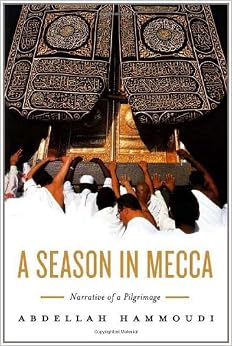
A Season in Mecca: Narrative of a Pilgrimage, by Abdellah Hammoudi

Ebook Download A Season in Mecca: Narrative of a Pilgrimage, by Abdellah Hammoudi
Exactly what's title of guide to keep in mind always in your mind? Is this the A Season In Mecca: Narrative Of A Pilgrimage, By Abdellah Hammoudi Well, we will ask you, have you review it? When you have read this publication, exactly what do you think? Can you tell others concerning exactly what sort of book is this? That's right, that's so outstanding. Well, for you, do you have not read yet this book? Don't bother, you need to get the experience and also lesson as the others who have actually reviewed it. And also now, we give it for you.
In this instance, A Season In Mecca: Narrative Of A Pilgrimage, By Abdellah Hammoudi is preferred for being the very best analysis material. This publication has some factors and reasons why you ought to review it. Initially, it will be about the web content that is written. This is not regarding the really stationary analysis product. This is about how this book will affect you to have analysis behavior. This is very interesting topic book that has actually been well-known in this recent time.
Reading this A Season In Mecca: Narrative Of A Pilgrimage, By Abdellah Hammoudi will certainly give you priceless time to read. Even this is simply a publication, the idea given is extraordinary. You could see how this publication is served making the much better future. For you who in fact do not like reading this book, don't bother. But, allow us to tell you something fascinating from this book. If you want to make better life, get this publication. When you want to undergo an excellent life for now as well as future, read this publication.
After obtaining the data of the A Season In Mecca: Narrative Of A Pilgrimage, By Abdellah Hammoudi, you have to know how you can handle your time to check out. Of course, many people will have various ways to organize the time. You could use it in your spare time in the house, at the office, or at the evening before resting. Guide documents can be likewise saved as one of the here and now analysis material
From Publishers Weekly
Hammoudi, a Paris-educated professor of anthropology at Princeton University, brings his worldly experiences to the most personal of journeys: the Islamic pilgrimage to Mecca (called the hajj in Arabic). Originally written in French, this English edition is being published to coincide with the 2006 hajj. Hammoudi is eager to explore the academic angles of the hajj, all the while doubting the strength of his own faith. He is constantly tested. First, he must bribe a mid-level government official in his native Morocco several times simply to be added to the country's quota list of pilgrims. Upon arrival in Medina, the city of the Prophet Muhammad, Hammoudi is stunned by the omnipresent markets hawking everything from rugs to suitcases. Still struggling for a religious experience, Hammoudi is angered by the Wahhabi stewards of Mecca and Medina, who police Islam's holiest sites with irrational Wahhabi zeal. Beset with the flu, Hammoudi still circumambulates the Kaaba in Mecca, appreciating the rare absence of gender segregation. Ghazaleh's translation is reminiscent of both French eloquence and Moroccan storytelling. At times, Hammoudi's intellectualism becomes too abstract to follow, but even such abstraction further adds to the mystical, almost surreal, journey. (Jan. 7) Copyright © Reed Business Information, a division of Reed Elsevier Inc. All rights reserved.
Read more
From Booklist
Hammoudi is a Princeton anthropologist whose previous work examined deeply rooted structures of authoritarian rule in Moroccan daily life through a highly accessible, if undeniably Foucauldian, lens. Here, he retains his focus on the profound minutiae of power structures as he examines the hajj, the highly ritualized journey to Mecca required of all Muslims. At least initially, Hammoudi approaches the Fifth Pillar as an academic outsider, fascinated by the rituals of pilgrims and the bureaucracies built around piety but privately conscious of his inability to dedicate himself to only one truth. Yet, without abandoning his academic wisdom--the source of much insightful analysis, particularly about the obstructive and instructive role played by national identity in a ritual celebrating religious unity--Hammoudi cannot stop the circumambulations at Mecca from awakening in him an understanding that does not easily translate into anthropological categories. It's not exactly a conversion story, but it is a tale of transformation. Hammoudi's deeply personal plunge into the subtleties of the sacred and the profane will interest many readers and perhaps inspire some as well. Brendan DriscollCopyright © American Library Association. All rights reserved
Read more
See all Editorial Reviews
Product details
Hardcover: 304 pages
Publisher: Hill and Wang; 1st edition (January 10, 2006)
Language: English
ISBN-10: 0809076098
ISBN-13: 978-0809076093
Product Dimensions:
5.8 x 1.1 x 8.5 inches
Shipping Weight: 15.5 ounces (View shipping rates and policies)
Average Customer Review:
2.9 out of 5 stars
9 customer reviews
Amazon Best Sellers Rank:
#1,334,461 in Books (See Top 100 in Books)
Some people might find this book to be interesting, but I found it to be horribly dull and had a hard time getting through it. He drones on and on about his inner struggle in going on the Hajj while being a (somewhat unbelieving) anthropologist and I found it to be redundant. I learned some interesting things about the pilgrimage through this book, but I think a lot of the theory was lost on me because I don't have much of a background in it--I would have much rather enjoyed a book which was less him and more experience. It might just have been that I found him to be annoying.
good
Vague
I'm writing this review knowing that I'm not going to do the book justice. The number one reason is that I'm far too removed from academia now and far too pressed for time to be able to follow closely and read and reread each passage. The second reason is that I read the first 141 pages more than a year before finishing the rest of the book.When I started reading the book, I was turned off by what I saw as the author's complaining about the endemic corruption of the developing world, similar to the WAWA (West Africa Wins Again) of U.S. travelogs in west Africa. The author's mentioning his disregard for ritual requirements and prohibitions and his lack of reverence for the blessing of Allah's invitation to His house pained me. And I just stopped reading the book.But from page 142 on, and I don't know if I'm imagining it, it was as if I was reading a totally different book. The participation in the rituals of ziyara, umra and hajj, no matter how "defective" the author's intention, changed the tone of the narrative. It was as if the magnitude of the crowds, the power of the stories the rituals reenacted, the landscape, the buildings, the sounds and the words of the Quran flooded over the dam of the author's preconceived research plan. But this flood was not destructive. Rather, the water initiated the germination of the seeds of Muslim identity lying in a soil enriched, not polluted, by the European-American discipline of anthropology.Now I may still be on a post Eid al-Fitr high, and I have to say just thinking about Makka is enough to make me cry (even this instant!)-May Allah azza wa jall invite us all there!-but I thought this author made me as a Muslim think about the hajj in ways I had not considered. And is there worship better than pondering Allah's signs in His messengers and His judgments?For the non-Muslim reader, I hope that the latter half of the book will bring attention to Islam as a religion rather than as a political movement.This book has by far the best description of the replacement and sacrifice of Ibrahim, Hajar and Ismail alayhim assalaam that I've read. In my brief Internet search, I came across a good article by Carol Delaney's Was Abraham Ethical? Should We Admire His Willingness to Sacrifice His Son? But Professor's Abdellah's discussion is at a whole other level.The book reminds me a lot of the only other "deep" anthropology book I've ever read, Paths Toward a Clearing by Michael Jackson. I have to read these kinds of books repeatedly to find their rhythm. If you have the time, it's well worth it.
In 1853, Sir Richard Francis Burton went on the pilgrimage (hajj) to Mecca, and his wonderful account of his successful impersonation as a Muslim pilgrim is still an exciting book. There have been other non-Muslims and Muslims who have written about the travel, which is one of the five pillars of Islam (the others being profession of faith, prayer, fasting, and alms giving). All Muslims who are able are obligated to take the hajj once in their lives. There are few modern accounts of the pilgrimage, which has become commercialized and, for those who have the money, routine. Now there is a unique account, from Abdellah Hammoudi, a professor of anthropology at Princeton University, who determined that he would undertake the hajj in 1999 for the purpose of writing a book on anthropological aspects of his trip. Any pilgrim has a journey unlike any other pilgrim, but Hammoudi's effort, chronicled in _A Season in Mecca: Narrative of a Pilgrimage_ (Hill and Wang) is distinct. He is not a believer like his other fellow pilgrims, even the friends he goes with. "I am not contemptuous of religions; I believe that under certain conditions they allow for expression of major existential dilemmas and encourage reconciliation on a grand scale." He grew up in Morocco, and was raised as a Muslim, which he says he still is, but a secular one. And so his journey set up conflicts from the start that he analyzes scrupulously at length, and which never really become resolved: "I couldn't possibly be an observer plain and simple, whether hostile and distant or friendly and admiring of Islam." He also had constantly to analyze his own participation in the ritual; can anthropologists rightly study cultures in which they are themselves taking part? Can the hajj have any value if undertaken in a secular vein?These questions, and those having to do with the basic personal meaning of the hajj, will perhaps be less interesting for most readers than the stories of preparation and the travelogue of the journey, told with good humor in a readable translation from the French (by Pascale Ghazaleh). For instance, Hammoudi had to submit thirty passport-style photographs and six copies of his birth certificate. He had to fill out a file on himself, and had to enlist the help of someone who knew someone. Of course, just filling in the forms would not do; he had to give a sum of money to a government employee ("which we decided to call `alms'") in order to lubricate the process. Once he was fully registered, he could not simply pack up and go. He had to be trained into what he was about to undergo, for violation of minor rules would invalidate the hajj and make it as if he had never participated at all. There were constant conflicts with commerce. One of Hammoudi's fellow pilgrims even says that the hajj is "a merchants' conspiracy." There is an obsession with purchasing suitcases, suitcases that will hold other purchases that are brought back home from the hajj, souvenirs for those left behind. The commercial aspects of the hajj were only one of the disappointments Hammoudi had to face. He was continually confronted with the segregation from women, which is stricter in Saudi Arabia than in his Moroccan home. Pilgrims were eager to criticize others; one pious man pointed out, "Our neighbors prayed behind our women. Their prayer is invalid." Hammoudi is disgusted by those who declare themselves the ones who have an absolute right to interpret the prophet's words for others. He is dismayed by the obvious differences between Shiites and Sunnis and the Wahhabi brand of Islam practiced in Saudi Arabia.It sounds a troublesome way to take a vacation, indeed. Hammoudi was, however, not just moved by the sad events that gives his narrative an overall "Ship of Fools" tone. There are surges of joy he describes, such as when he visits Mohammed's tomb. He describes the circling crowd at the Kaaba and being overcome with emotion and tears, and is willing to leave behind any negative lessons he has learned. "Now I understood the meaning of certain statements I had often heard: `What happiness to be here! How good God's grace is... What joy one feels at seeing all this!" Many of the pages of _A Season in Mecca_ have to do with an intellectual's attempts to come to an objective understanding of the many strange events which compose a hajj, but the subjectivity and ineffability of faith keep breaking through.
A Season in Mecca: Narrative of a Pilgrimage, by Abdellah Hammoudi PDF
A Season in Mecca: Narrative of a Pilgrimage, by Abdellah Hammoudi EPub
A Season in Mecca: Narrative of a Pilgrimage, by Abdellah Hammoudi Doc
A Season in Mecca: Narrative of a Pilgrimage, by Abdellah Hammoudi iBooks
A Season in Mecca: Narrative of a Pilgrimage, by Abdellah Hammoudi rtf
A Season in Mecca: Narrative of a Pilgrimage, by Abdellah Hammoudi Mobipocket
A Season in Mecca: Narrative of a Pilgrimage, by Abdellah Hammoudi Kindle

0 komentar:
Posting Komentar